Zone 2 Training for Cyclists: The Complete Guide
Ask most amateur cyclists how they train and you get some version of the same answer. They ride hard when they feel good, easier when they don't, do the occasional group ride that turns into a race, and wonder why their fitness has been roughly the same for two or three years.
Zone 2 training is the piece almost everyone is missing, and misunderstanding.
It is not about riding slowly. It is not junk miles. It is not what you do when you don't feel like working hard. Zone 2 is a specific physiological target that builds the aerobic engine everything else in cycling performance runs on. The best endurance athletes in the world spend the majority of their training time here. Most amateurs barely visit it.
What Zone 2 Actually Is
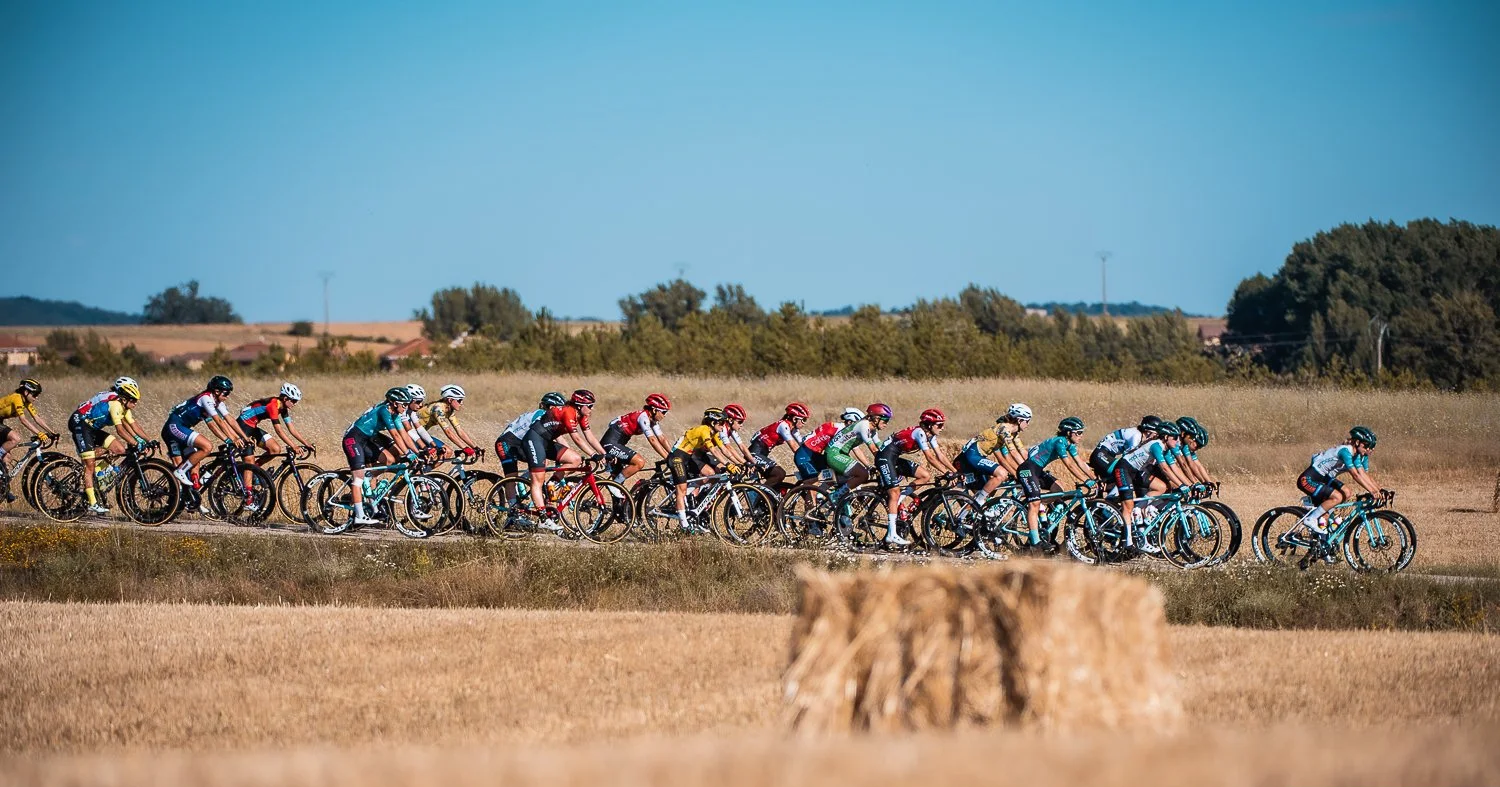
Zone 2 is the intensity at which your aerobic system is working hard but not being stressed. You are burning predominantly fat as fuel, your slow-twitch muscle fibers are doing most of the work, and lactate is being produced and cleared at roughly the same rate, staying well below your first lactate threshold (LT1), which sits around 2 mmol/L for most athletes.
In power terms, Zone 2 sits between 56 and 75% of your FTP. In heart rate terms, roughly 60 to 70% of your maximum. The feel is a sustained, conversational effort. You could hold a full sentence without gasping. It should never feel like you are pushing, but it should feel like something.
What it is not: recovery riding. Zone 1 is recovery, nearly trivial effort under 55% of FTP, used to flush fatigue between hard sessions. Zone 2 is training. It has a specific stimulus and a specific adaptation. Confusing the two is extremely common and means many riders either go too easy to generate any useful signal, or drift above Zone 2 into tempo without realizing it.
Why Zone 2 Works: The Physiology
Mitochondrial density increases. Mitochondria are the organelles inside muscle cells that convert oxygen and fuel into energy. More mitochondria means more aerobic power. Zone 2 is the most potent stimulus for mitochondrial biogenesis because it keeps the aerobic system under sustained load without overwhelming it.
Fat oxidation improves. At Zone 2 intensity your body learns to burn fat more efficiently as fuel. Fat stores are virtually unlimited even at low body weight, while glycogen stores are finite and run out. The better your fat oxidation, the longer you sustain hard efforts before depletion becomes a limiting factor. This is why well-trained endurance athletes can ride at surprisingly high power outputs while barely touching their carbohydrate reserves.
Cardiac output develops. Sustained Zone 2 work increases stroke volume, the amount of blood the heart pumps per beat. A stronger, more efficient heart delivers more oxygen to working muscles and raises the ceiling on everything you can do at higher intensities.
Lactate clearance improves. Regular Zone 2 training teaches the aerobic system to process lactate more efficiently. This directly raises your lactate threshold, meaning the intensity at which lactate starts accumulating moves upward, and you can ride harder before crossing into the anaerobic zone.
All of these adaptations are slow. The benefits do not appear in a week. They compound over months of consistent work. Athletes who abandon Zone 2 during busy periods and replace it with shorter harder sessions find their long-term fitness plateauing even when short-term performance feels fine.
Why Zone 2 Dominates Pro Training
This is not a theory. It is how the best endurance athletes in the world actually train.
The polarized training model, developed from research into elite athletes across endurance sports, shows that top performers spend roughly 80% of their training volume at low intensity and 20% at high intensity. Almost nothing in the middle.
WorldTour cyclists, Olympic runners, cross-country skiers: the pattern is consistent across sports and documented across decades of data. The middle zones (tempo, sweetspot) feel hard and accumulate fatigue but do not generate the deep aerobic adaptations of Zone 2 nor the VO2 max stimulus of Zone 5. They are the intensity trap: working hard without pointing at anything specific.
Most amateur cyclists invert this entirely. They spend the majority of time in Zone 3, too hard to be a true aerobic session, not hard enough to drive threshold adaptation. The group ride that drifts to tempo pace. The solo ride where boredom pushes effort upward. The easy day that becomes something harder because easy feels unproductive.
Getting Zone 2 right means resisting that drift, consistently, for months.
How to Actually Do Zone 2 Correctly
The most common mistake is going too hard. Genuine Zone 2 will feel almost embarrassingly slow at first, particularly outdoors where terrain, wind, and group dynamics constantly pull intensity upward.
Use a heart rate monitor or power meter as your anchor. Zone 2 by feel alone is unreliable. Target 60 to 70% of your max heart rate, or 56 to 75% of your FTP. If a climb pushes your heart rate above Zone 2, back off the power. The target is the physiological zone, not the terrain.
Duration matters more than intensity. A Zone 2 session needs to be long enough to generate a meaningful stimulus, at least 45 minutes and ideally 60 to 90 or more. Short Zone 2 sessions produce almost no adaptation signal. Professional cyclists ride four and five-hour Zone 2 sessions not because they have unlimited time, but because duration is what drives the adaptation.
Nutrition affects Zone 2 quality. Training fasted or low-carbohydrate during Zone 2 can enhance fat oxidation adaptations. But arriving carbohydrate-depleted from the previous day's hard effort makes holding Zone 2 power harder than it should be. Zone 2 quality requires managing fueling across the whole week, not just the session itself.
Consistency over weeks beats any single session. One long aerobic ride every ten days does almost nothing. Three to four sessions of 60 to 90 minutes every week for twelve weeks begins to move the needle substantially.
How Much Zone 2 Do You Actually Need
The honest answer depends on where you are and what you are training for, but some principles hold across the board.
Beginners benefit enormously from a high proportion of Zone 2. Building the aerobic base makes all subsequent training more effective. Pushing intensity too early without base is like building on sand.
Athletes targeting long events, gran fondos, cyclosportives, multi-day mountain trips, need a large Zone 2 foundation because the events themselves are largely aerobic. Being good at Zone 5 intervals will not save you at hour five of a mountain stage. Being good at Zone 2 will.
Time-constrained cyclists should still prioritize Zone 2 in the sessions they have. A 90-minute Zone 2 ride three times a week builds fitness in a way that three 90-minute tempo efforts simply will not, despite feeling less productive in the moment.
The rough guide: aim for at least 60 to 70% of your total weekly training time in Zone 2. Track it honestly with heart rate or power data. Most riders who do this for the first time discover they were spending far less time there than they thought.
Signs Your Zone 2 Is Working
Adaptation takes time, but it leaves measurable traces. After 8 to 12 weeks of consistent Zone 2 work, you should start to notice:
Your heart rate at Zone 2 power drops. The same effort that used to push you to 145 bpm now sits at 135. Your heart is doing the same work more efficiently.
Your Zone 2 power at the same heart rate increases. You can hold a higher wattage before crossing into Zone 3. Your aerobic system has expanded.
Recovery between hard sessions improves. A better aerobic base clears lactate faster. Hard sessions stop feeling like they take three days to recover from.
Long rides feel more sustainable. Where you used to fade in the final hour, you now hold pace more consistently. Fat oxidation is doing more of the work.
Zone 2 and Coaching
Zone 2 sounds simple. In practice, doing it correctly and building it into a structured program is where most self-coached riders go wrong.
The common failure modes: riding too hard on Zone 2 days, not enough volume to generate meaningful adaptation, skipping Zone 2 sessions in busy weeks in favor of shorter harder efforts, and losing patience with a process that shows results slowly.
A coach structures your Zone 2 within the full picture of your training, making sure easy days are genuinely easy, hard days are hard enough, and the balance between the two drives adaptation rather than just accumulating fatigue.
At Camomille CC, Zone 2 is the foundation of every athlete's program regardless of level or goal. If you want to understand exactly how much you need and how to build it into your specific schedule, that starts with a free consultation.
Want to understand the number that anchors all your training zones? Read the full guide to FTP in cycling. Or find out how online cycling coaching works.
Luli Roland is a UCI Level III certified coach, former Pan-American Champion, and co-founder of Camomille CC. She coaches cyclists at all levels from Argentina and remotely worldwide.
