How to Fit Cycling Into a Busy Life (And Actually Stick With It)
You want to ride more. You know it would make you feel better, fitter, clearer. But between work, family, and everything else that fills a week, the bike keeps losing.
You go hard for one week, then disappear for two. Something always comes up. And the harder you try to cram more riding in, the harder it becomes to sustain.
This isn't a willpower problem. It's a planning problem, and it has a solution.
Why the "Ride Whenever You Can" Approach Fails
Cycling without a structure doesn't reward effort the way you'd expect.
When you ride hard whenever you have spare energy, three things happen. You overdo it in good weeks, leaving yourself too tired to ride consistently the week after. You undertrain in busy weeks because there's no minimum commitment that feels manageable. And you never build the kind of progressive fitness that comes from showing up regularly over months.
The result is a fitness level that oscillates rather than climbs. Good weeks feel great. Bad weeks feel like starting over.
The irony is that doing less, more consistently, gets you further than doing more, sporadically. Three one-hour rides every week for three months will outperform a week of daily riding followed by two weeks of nothing, every single time.
The Fix: Plan the Week Before It Happens
Consistency starts with a decision made in advance, not in the moment.
Look at your upcoming week before it begins. Find two or three windows where a ride is genuinely possible — not ideal, genuinely possible. Put them in the calendar as fixed appointments. Protect them the same way you'd protect a work meeting.
Start with what's realistic, not what's aspirational. If two rides a week is what your life actually allows right now, commit to two. Hitting two every week for eight weeks builds more fitness and more momentum than aiming for five and averaging two anyway, while feeling like you're constantly falling short.
Once consistency at two sessions is solid, adding a third is easy. The other direction, chasing a number you can't sustain, leads to the feast-and-famine cycle most busy cyclists are already stuck in.
Shorter Rides Count More Than You Think
One of the most common myths in cycling is that short rides aren't worth doing.
They are. A 45-minute Zone 2 ride, done at the right intensity, delivers a genuine aerobic training stimulus. It maintains the fitness you've built. It keeps the habit alive during busy periods. And it keeps you from arriving at a quieter week having lost two weeks of conditioning.
The key is intensity. A 45-minute ride at easy, controlled Zone 2 effort does real work. A 45-minute ride where you push hard the whole time and arrive home exhausted doesn't just fail to build fitness — it creates fatigue that makes the rest of the week harder.
Short and easy beats nothing. Short and hard often beats nothing too, just not by much.
Avoid the Overtraining Trap
The week where you ride every day and push hard feels productive in the moment. It often costs you two to three weeks afterward.
Overtraining doesn't always feel like collapse. More often it feels like: legs that never quite recover, motivation that quietly disappears, sessions that feel harder than they should at the same power output, and a vague sense of dreading the bike rather than looking forward to it.
The body adapts to training during rest, not during the training itself. Skipping recovery undermines the sessions you've already done. A well-placed easy week is not lost time. It's where the fitness from the previous weeks actually sets in.
What a Realistic Weekly Cycling Schedule Looks Like
For a cyclist with a full-time job, family commitments, and 4 to 6 hours available per week, a sustainable structure might look like this:
Tuesday (45 to 60 min): Zone 2 ride before work or at lunch. Controlled, easy, consistent effort.
Thursday (45 to 60 min): A second Zone 2 session or a short structured interval session if fitness allows.
Saturday or Sunday (90 to 120 min): The longer ride. This is where you explore, join a group, or do something that reminds you why you started.
That's it. Three rides, 4 to 5 hours total. Done consistently every week, this builds real fitness over months — more than irregular five-day training weeks ever will.
The Role of a Coach in Making It Work
The hardest part of training with limited time isn't the riding. It's making the right decisions about what to ride, when, and at what intensity — every week, across months.
A coach removes that decision load. They look at your calendar, your life, your goals, and your current fitness, and tell you exactly what to do with the time you have. Not the time you wish you had. The time that actually exists.
They also tell you when to back off — which is the part most self-coached cyclists consistently get wrong. Knowing that an easy week is prescribed, not a failure, changes how you experience it.
At Camomille CC, every coaching plan is built around real life first. The training fits the schedule, not the other way around.
Want to understand how to make the most of the time you do have on the bike? Read the full guide to Zone 2 training for cyclists, or find out how online cycling coaching works.
Want to understand the number that anchors all your training zones? Read the full guide to FTP in cycling. Or find out how online cycling coaching works.
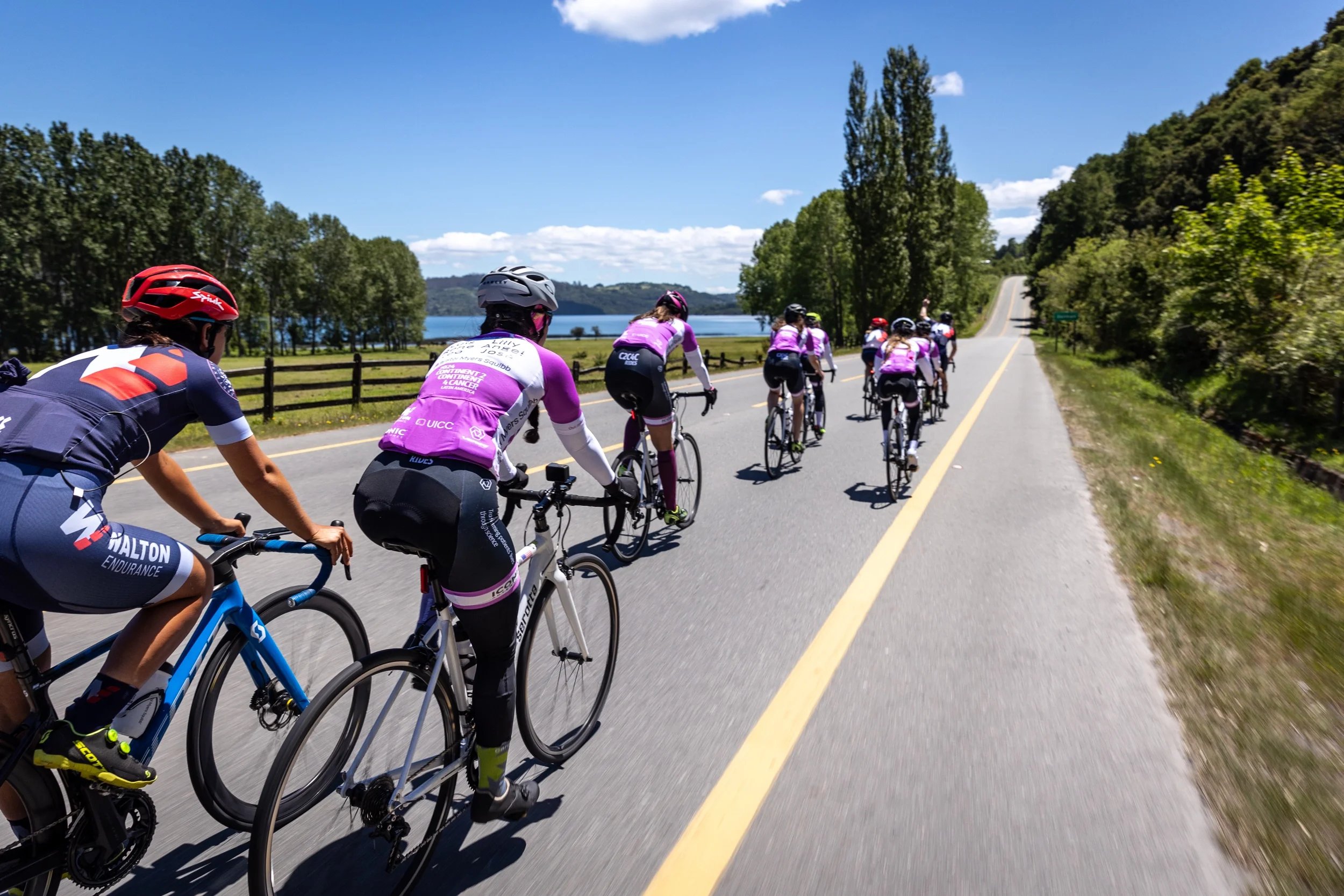
Luli Roland is a UCI Level III certified coach, former Pan-American Champion, and co-founder of Camomille CC. She coaches cyclists at all levels from Argentina and remotely worldwide.
