Sa Calobra Cycling — The Complete Guide to Mallorca's Most Iconic Climb
There are climbs cyclists do because they train on them. There are climbs they do because they're fast. And then there is Sa Calobra — a climb cyclists do because they have to. Because every serious road cyclist who has ever looked at a photo of that road, those switchbacks, those limestone cliffs dropping straight into the Mediterranean, has said to themselves: one day.
If you're planning a cycling trip to Mallorca and haven't put Sa Calobra on the list, this guide will change that. And if it's already on the list, this is everything you need to know before you go.
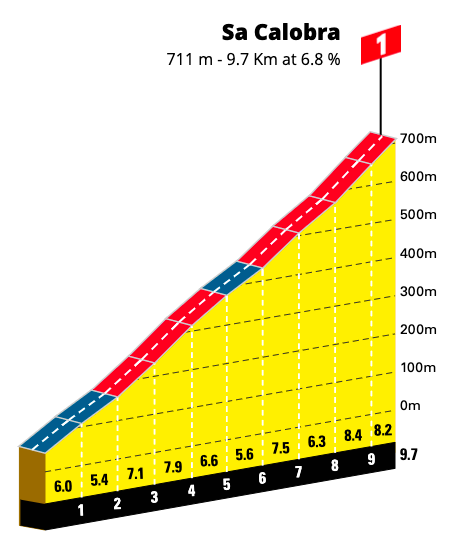
Sa Calobra Elevation Profile
What Is Sa Calobra?
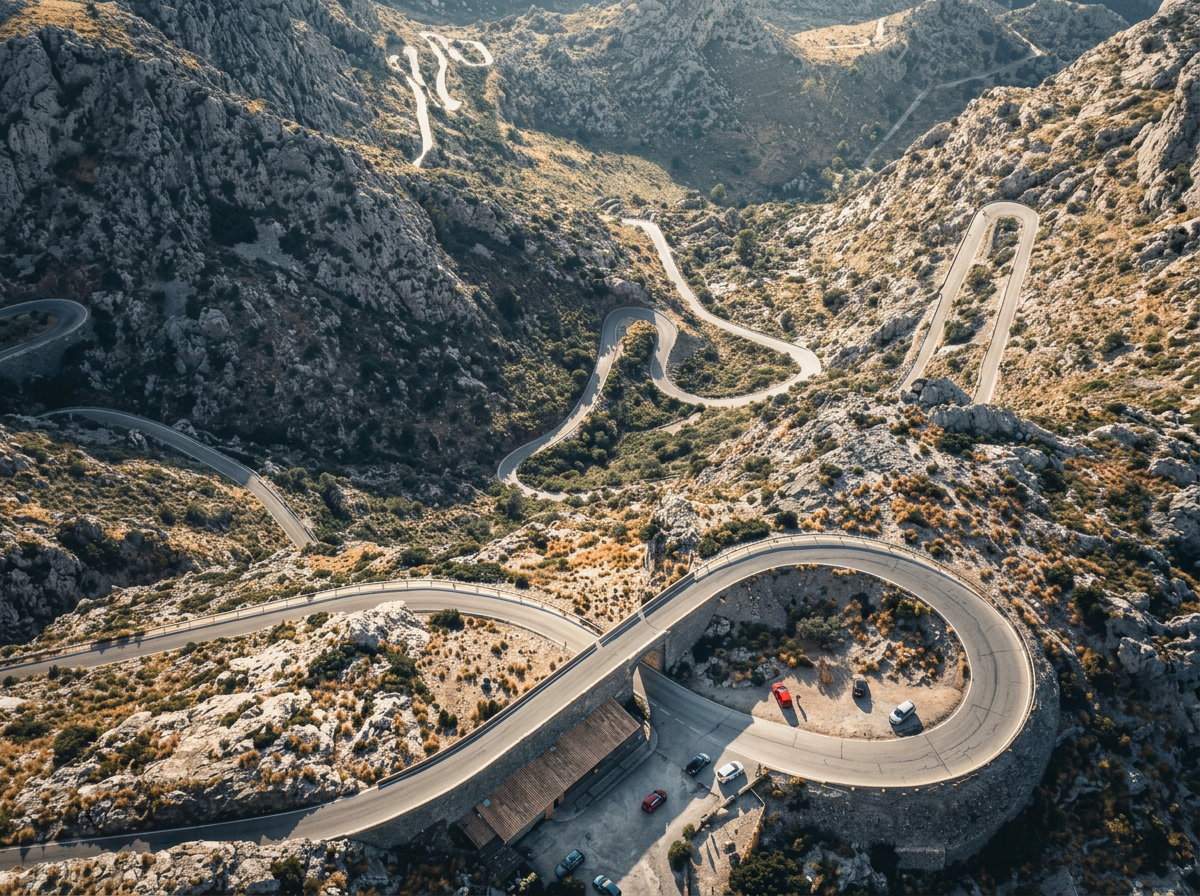
Sa Calobra is a 10-kilometre road on the northwest coast of Mallorca, built in the 1930s by engineer Antonio Parietti Coll. It descends from approximately 682 metres above sea level to a tiny port village at the edge of the Torrent de Pareis gorge, where the limestone mountains meet the sea.
The road has 26 hairpin bends, a 270-degree loop-the-loop spiral bridge, and an average gradient of 7%, with sections pushing 10% in the final three kilometres from the bottom. What makes it genuinely unusual — and genuinely difficult — is its out-and-back nature. You descend to Sa Calobra. You climb back out. There is no other exit unless you catch a boat from the port.
That combination of technical design, spectacular scenery, and inescapable vertical gain is what turned Sa Calobra from a road into a legend. It has been a training ground for Tour de France winners, an obsession for amateur cyclists, and the single image that comes to mind when anyone in the world mentions cycling in Mallorca.
The Numbers
Before anything else, here is exactly what Sa Calobra involves:
The descent (top to bottom)
Length: 9.5 to 10 km
Elevation lost: 682 m
Average gradient: 7%
Maximum gradient: 12% in sections
Character: flowing switchbacks, tight technical corners at the top, progressively opening as you descend
The climb (bottom to top)
Same road in reverse
Hardest section: final 3 km from the port, sustained at 8 to 10%
Average time for trained amateurs: 45 to 60 minutes
Current Strava KOM: Tom Pidcock, set December 2022, under 23 minutes
The approach from Pollença (Camomille CC route)
Total ride: approximately 90 km
Elevation gain for the full loop: 2,450 m
Key climbs before Sa Calobra: Coll de Sa Batalla (7.8 km at 5%), flanks of Puig Major
Total estimated riding time: 5.5 hours
Total day duration: approximately 7 hours including coffee stop
How Hard Is Sa Calobra?
Honestly: it is hard, but it is not the hardest part of your day.
The climb itself is 10 kilometres at 7% average. For context, that is similar in length and gradient to many classic Alpine climbs. What makes it feel harder is the psychological weight of having already descended it — you know exactly what is coming because you just rode down it. You can see the road above you. You can count the switchbacks.
The hardest section is the last three kilometres from the port. Gradient increases, the road narrows, and by this point you have already done 80+ kilometres and 1,700+ metres of climbing. That is when it demands everything.
What the gradient table cannot tell you is what the descent feels like before the climb. Coming down from the Coll dels Reis, you are already 50+ kilometres into the ride. The descent is 10 kilometres of flowing, beautiful road — but it is not a rest. Focus, brake management, and line choice matter from the first corner. The road is shared with tourist buses in peak season. Keep that in mind.
The honest fitness benchmark: you should be comfortable completing a 4 to 5 hour ride with sustained climbing before attempting Sa Calobra as part of a full-day loop. If your longest recent ride is 2 hours, this is not the day. If you regularly ride 3 to 4 hours and climb well, you are ready — you will be challenged, but you will make it.
The Approach from Pollença — What to Expect
Most cycling guides describe Sa Calobra as if the road exists in isolation. In reality, how you approach it determines how much is left in your legs when you reach the bottom and turn around to climb back out.
Starting from Pollença — which is where Camomille CC begins every Sa Calobra tour — you ride south through the Tramuntana foothills before the road begins to climb in earnest.
The Coll de Sa Batalla comes first. 7.8 kilometres at an average of 5%, gradual enough to find a rhythm, long enough to work. The views opening over the northern Tramuntana on the ascent are reason enough to pace carefully here. Riders who push the Coll de Sa Batalla arrive at Sa Calobra with less than they need.
The Puig Major flanks follow. Puig Major is the highest point in Mallorca at 1,445 metres. The road traverses its lower slopes before the junction that drops you toward the Coll dels Reis and the start of the Sa Calobra descent. By this point you have climbed over 1,000 metres and ridden roughly 40 kilometres. The descent is earned.
The descent into Sa Calobra begins with a sweeping view down the road that has made countless cyclists stop mid-corner to look. The knot — Sa Calobra's famous 270-degree spiral — appears below you before you reach it, a loop of tarmac curled around itself like a rope dropped from height. You ride through it from the outside and emerge going the opposite direction. It is one of the most extraordinary pieces of road engineering in the world.
At the bottom: the port. A small cluster of restaurants, the mouth of the Torrent de Pareis gorge, and the sea. Stop. Breathe. Take the photo. Eat something. You will need it.
Then the climb back up begins. And the only thought worth having is this: forward.
The Sa Calobra Climb: Section by Section
Kilometres 0 to 3 (from the port): the hardest section. Gradient is sustained at 8 to 10%. The road is narrow. The sun, depending on time of day, can be directly in your face on the ascent. This is where most riders find out what they have left. Keep the cadence up, resist the urge to push a big gear, and do not look at the top.
Kilometres 3 to 7: the road opens slightly. Gradient eases to 6 to 7% average. The switchbacks lengthen, the views grow, and the rhythm returns. This is where the climb becomes beautiful rather than brutal. Allow yourself to look around.
Kilometres 7 to 10 (to the summit): the final run to the Coll dels Reis sign. Gradient is variable, with some sections almost flat and others returning to 8%. The Coll dels Reis is the official summit. The sign is there. You will want a photograph. You have earned it.
When to Ride Sa Calobra
Best months: March, April, May, September, October.
These months combine reliable weather, manageable temperatures, and road conditions that allow you to ride at your own pace rather than navigating tourist traffic. The road to Sa Calobra is open to private vehicles and tourist buses, and in July and August the descent becomes significantly more crowded.
Spring (March to May) is when professional teams train in Mallorca. You will share the road with riders from WorldTour squads. The light is extraordinary, the almond and olive trees are in bloom along the lower Tramuntana approaches, and temperatures sit between 12 and 22 degrees — ideal for a hard day in the mountains.
Autumn (September to October) is equally good and quieter. Tourist traffic has eased, temperatures have dropped from the summer peaks, and the late afternoon light on the limestone walls above the road is something worth lingering for.
Avoid July and August if you are riding the full loop. Heat becomes a genuine factor. The tourist buses on the Sa Calobra road increase significantly. And the café at the bottom will be packed with people who arrived by boat.
Practical Details — What You Need to Know
Gearing. A 34-tooth chainring minimum. A 30-tooth cassette is strongly recommended. The 10% sections at the bottom of the climb are not the place to discover you are undergeard.
Nutrition. Eat before the descent. The climb back up is not the moment to realise you have run out of fuel. Carry two bottles at minimum on the approach. There is a café at Sa Calobra port — use it. It is not optional.
Timing. Aim to reach the Sa Calobra junction (top of the descent) before noon if starting from Pollença in the morning. This gives you the descent in ideal light, the climb in manageable heat, and the return to Pollença well before dark.
Traffic. Tourist buses use the Sa Calobra road from mid-morning onward. They are wide, they are slow on the descent, and the road has limited passing places. Riding down by 9 to 10am avoids the worst of it. Climbing up, buses overtake you — they are slow enough that this is manageable.
The Torrent de Pareis. If time allows, walk to the gorge. The Torrent de Pareis is one of the most dramatic natural features in Mallorca — a limestone canyon that narrows to a few metres wide before opening to the sea. Most cyclists ride straight back up from the port. The ones who walk the short path to the gorge remember it longer than the climb.
Riding Sa Calobra with a Private Guide
There is a difference between surviving Sa Calobra and riding it well.
A private guide who knows the road, the corners where you can let the speed build, the sections where braking matters more than momentum, the pacing strategy on the ascent that gets you to the top with something left, turns Sa Calobra from a survival exercise into the day you wanted it to be.
At Camomille CC, every Sa Calobra ride is guided by Luli Roland, UCI Level III certified coach, former Pan-American Champion, and a cyclist who has ridden this road more times than she can count. She knows which corner opens up after the spiral, where to find the rhythm on the ascent, and when to push and when to hold back.
The ride is fully private. Your group only. No strangers to set the pace. No one to wait for who is not in your group. The route is planned around you specifically, your fitness, your goals, your pace.
The full day Pollença to Sa Calobra loop covers 90 kilometres and 2,450 metres of elevation. A coffee and pastry stop is included at a local café after the summit. Mechanical support and nutrition guidance are available throughout.
Sa Calobra Full Day Private Ride starts from €390 for 1 to 2 riders.
Is Sa Calobra on Your List?
If you are riding in Mallorca and you have not done Sa Calobra, it should be. Not because it is the hardest climb on the island, but because it is the one that stays with you. The descent. The knot. The sea at the bottom. The climb back out when your legs are empty and you do it anyway.
Plan it properly. Respect the approach. Pace the descent. And climb the way back out one kilometre at a time.
FAQs about Sa calobra
-
Most trained amateurs climb Sa Calobra in 45 to 60 minutes. The Tom Pidcock KOM is under 23 minutes. Budget an hour and ride your own pace. Sa Calobra is not the kind of climb you should rush.
-
Sa Calobra as a standalone climb is achievable for cyclists who can ride 2 to 3 hours comfortably with some climbing experience. As part of the full Pollença loop, it requires genuine endurance fitness, we recommend being comfortable with 4 to 5 hour rides before attempting the full day.
-
Yes. The road is open year-round. The best conditions are March to June and September to November. In winter, the descent can be wet and cold, manageable but requires extra care.
-
No. A heart rate monitor helps with pacing, keeping heart rate below threshold on the early climbs leaves more for the Sa Calobra ascent. But riders without any data device complete this route every day.
-
The Coll dels Reis is the mountain pass at the top of the Sa Calobra road. At approximately 682 metres, it marks both the start of the descent and the end of the climb. The name translates as "Pass of the Kings." The sign at the top is the photograph every rider wants.
-
Yes, but be aware that the road is narrow in sections and tourist buses use it regularly from mid-morning. Smaller groups navigate the descent more smoothly. Our private tours take up to 6 riders per guide.
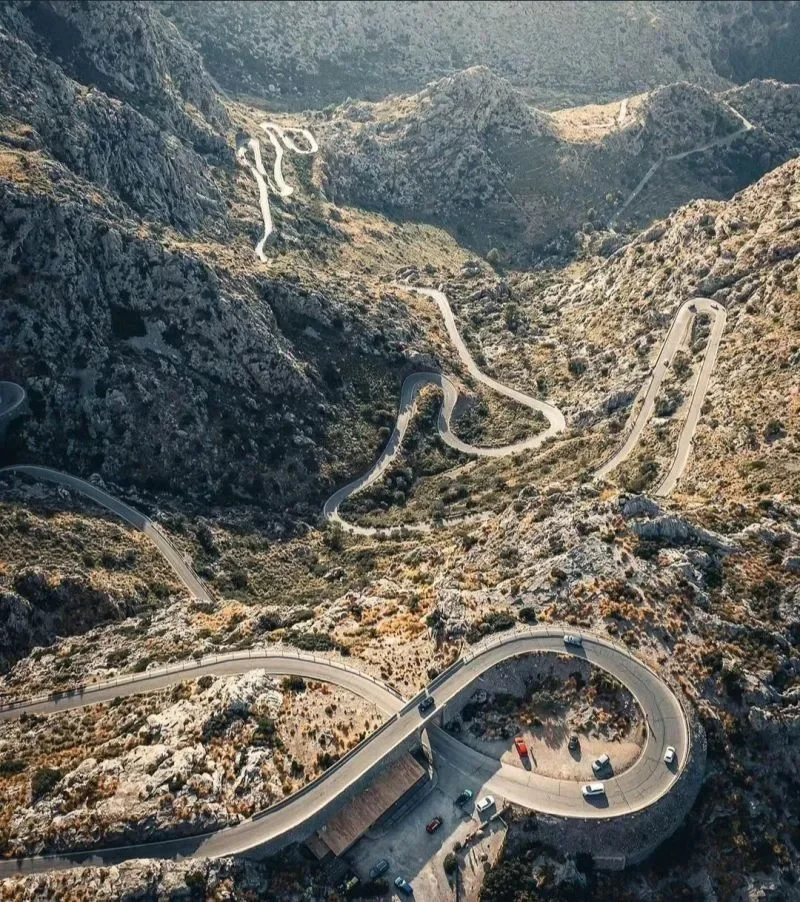
Sa Calobra is not just a climb. It is one of the most technically breathtaking roads ever built, carved into the cliffs of the Tramuntana mountains and descending 10 kilometres to a sea cove at the bottom of the world. Riding it — both down and back up — is something cyclists plan for years.
Starting from Pollença, a fully private, fully supported full day ride on one of the most iconic loops in Mallorca. One guide, your group, no compromises. This is a full day private experience built entirely around you. Your guide is a former professional cyclist. Your pace, your route, your ride.
Starting from €250 for 1 to 2 riders.
Want to understand the number that anchors all your training zones? Read the full guide to FTP in cycling. Or find out how online cycling coaching works.
Luli Roland is a UCI Level III certified coach, former Pan-American Champion, and co-founder of Camomille CC. She coaches cyclists at all levels from Argentina and remotely worldwide.
